Experience experiments.
Think like a scientist.
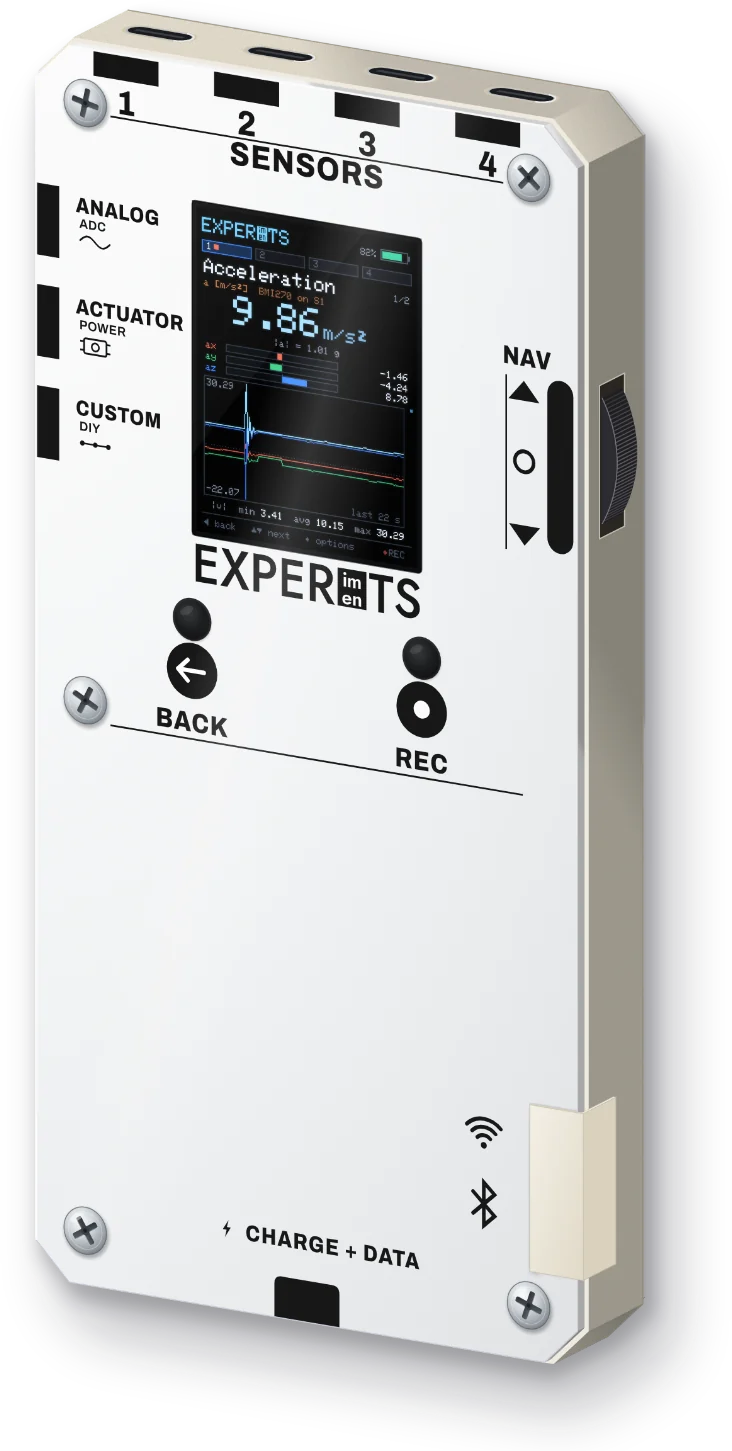
We make guided physics experiments, the platform to run them on, and our own instrument: the Hepek. No Hepek? Most experiments need nothing more than a phone, a ruler or a stopwatch.





Longer string.
Slower swing?
Make a pendulum's string four times as long. For small swings, how much longer does one full swing take?
Peek at the physics
Twice as long: the period grows with the square root of the length. Four times the length gives twice the period.
Your hunch is the starting point.
Can a ruler measure one sheet of paper? Start by devising a method. Then try it, compare results and find a better way.
Ask & predict
Estimate before you measure. Put your reasoning into words, not just an answer box.
Build & measure
Try your idea with familiar materials. Hints help you take the next step without doing the thinking for you.
Explain & rethink
Turn measurements into graphs. Question the errors, improve your method and ask what else it could measure.
What will you find out?
Preview the guides without an account. Sign up to save your work.
Measuring g with a pendulum
Turn a string and a weight into a precise instrument and measure gravity.
Welcome: how experiments work
A two-minute tour of questions, tables, graphs and sensors.
Meet the Hepek
Three short stations: a sensor that lags, a sensor you calibrate and a signal hiding in noise.
Your pulse is data
Count your heartbeats to learn the platform and the first rule of experiments: predict, then measure.
Gravity from a swing
Put every habit together: test fairly, straighten a curve, fit it and argue. Measure g with a string and a weight.
How thick is a page?
A ruler can't see a tenth of a millimetre, but a stack of pages can. Measure the invisible and meet systematic error.
Start with what you have.
The clever part is how you measure, not how much equipment you own.
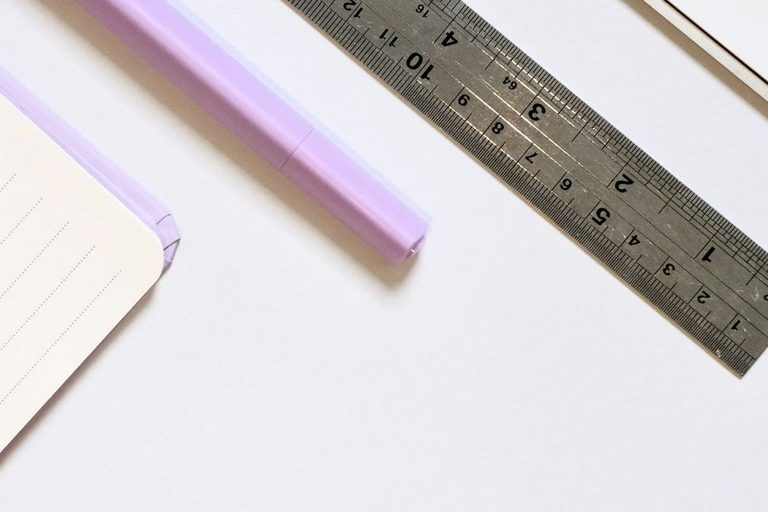
Everyday things
A ruler meets a stack of paper. A stopwatch meets a pendulum. Simple tools, ingenious measurements.
Ruler and stopwatch experiments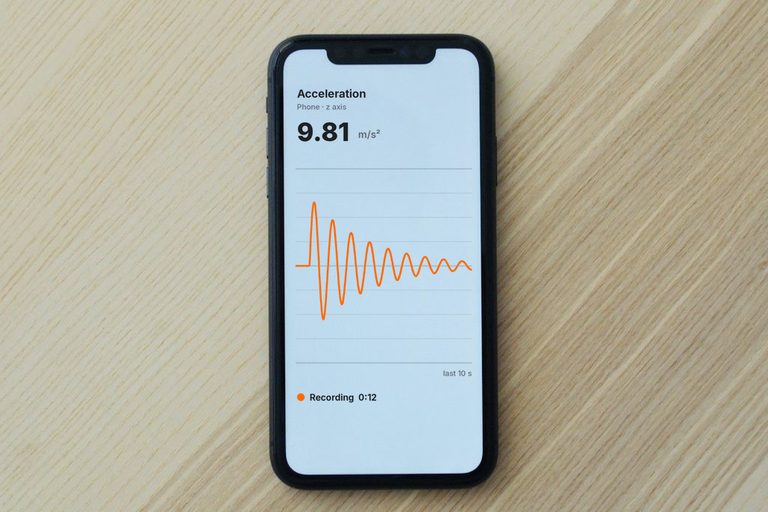
Your phone
Its motion sensors and microphone, read in the browser. Nothing to install: rock it gently and watch the graph.
Phone experiments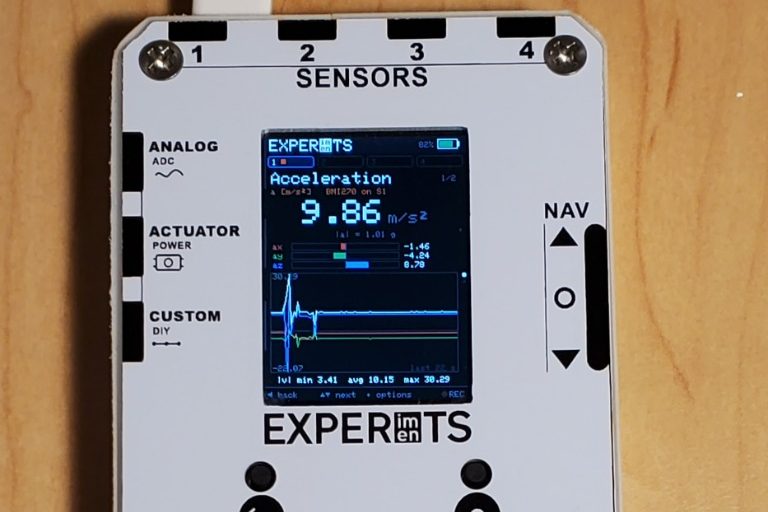
The Hepek
Our own instrument, for what a phone can't measure: force, voltage, distance, light and more.
Hepek experiments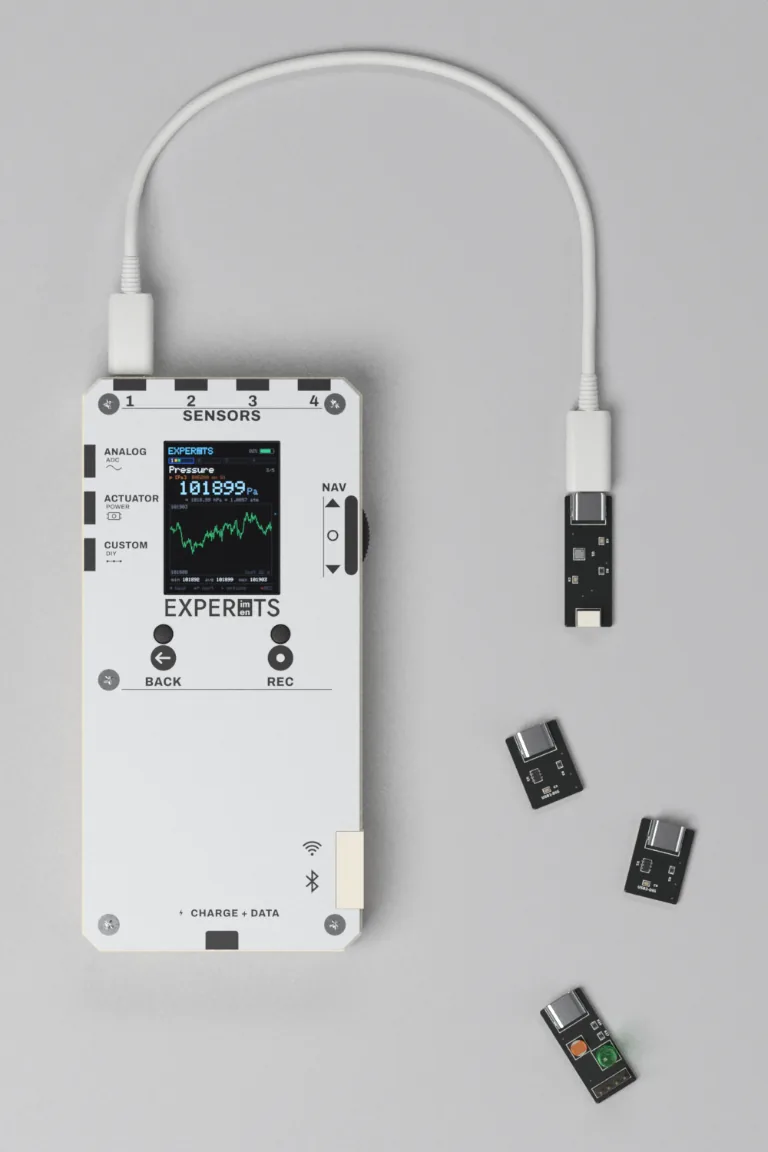
In class. At home. Together.
Shared questions. Different methods. Plenty to talk about.
Schools & homeschool
Choose experiments for your lessons. Teachers can assign work, follow progress and give feedback.
Independent explorers
Follow your curiosity at your own pace, with guided questions and tools to make sense of your data.
Clubs & communities
Build a workshop around a shared question. Make, measure and discuss what you discover.
Scientists who started with curiosity.
Former Physics Olympians from Bosnia and Herzegovina, building on years of hands-on teaching at STEM camps.


Experiments in the field
Syrian refugee camp
A science camp with Save the Children Jordan, using the Hepek to run experiments without internet.

Electrical engineering camp
Hands-on electrical engineering workshops for students in Ethiopia.

STEM camps at home
Where it began: students measuring, analysing and presenting their own findings.

How we think about learning
Notes on teaching, measuring and making sense of data.
From “wow” to evidence: when a demonstration becomes an experiment
A striking effect can spark curiosity. Measurement, analysis and explanation turn that moment into a scientific experience students can own.

Measure, doubt, explain: how we design learning experiences
Why every experiment starts with a hunch, why we show students the messy data, and what a book about data visualisation taught us about earning a learner's trust.
Bring experiments to your learners.
Tell us who you teach and what you'd like to explore. We'll help you choose experiments, kits or a workshop.
- bahrudin@mit.edu
- Cambridge, MA, USA